What is bile duct cancer?

Bile duct cancer, also called cholangiocarcinoma, is a cancer that’s found anywhere in the bile ducts.The bile ducts are small tubes that connect different organs. They are part of the digestive system.How serious bile duct cancer is depends on where it is in the bile ducts, how big it is, if it has spread and your general health.

Main symptoms of bile duct cancer

Bile duct cancer may not have any symptoms, or they can be hard to spot.

Symptoms of bile duct cancer can include:

  • your skin or the whites of your eyes turn yellow (jaundice), you may also have itchy skin, darker pee and paler poo than usual
  • loss of appetite or losing weight without trying to
  • feeling generally unwell
  • feeling tired or having no energy
  • a high temperature, or you feel hot or shivery

Other symptoms can affect your tummy, such as:

  • feeling or being sick
  • pain in your tummy

Who is more likely to get bile duct cancer

Anyone can get bile duct cancer. It’s not always clear what causes it.

You might be more likely to get it if you:

  • are over the age of 65
  • have certain medical conditions, such as abnormal bile ducts, long term swelling in the bowel (ulcerative colitis) or bile ducts, a parasite in the liver (liver flukes), bile duct stones and liver cirrhosis

Information:

It’s important to get any symptoms of bile duct cancer checked by a GP.

Anyone can get bile duct cancer, even if you do not think you have a higher chance of getting it.

You will need more tests and scans to check for bile duct cancer if the GP refers you to a specialist.

These tests can include:

  • blood tests
  • scans, like an ultrasound scan (sometimes from inside your body using an endoscope), CT scan, or MRI scan
  • collecting a small sample of cells from the bile ducts (called a biopsy) to be checked for cancer
  • a test called an ERCP
  • a special kind of X-ray called PTC

You may not have all these tests.

These tests can also help find problems in other nearby organs. Such as your pancreas, gallbladder or liver.

Getting your results

It can take several weeks to get the results of your tests.

Try not to worry if your results are taking a long time to get to you. It does not definitely mean anything is wrong.

You can call the hospital or GP if you are worried. They should be able to update you.

A specialist will explain what the results mean and what will happen next. You may want to bring someone with you for support.

If you’re told you have bile duct cancer

Being told you have bile duct cancer can feel overwhelming. You may be feeling anxious about what will happen next.

It can help to bring someone with you to any appointments you have.

A group of specialists will look after you throughout your diagnosis, treatment and beyond.

Your team will include a clinical nurse specialist who will be your main point of contact during and after treatment.

You can ask them any questions you have.

If you’ve been told you have bile duct cancer, you may need more tests.

These, along with the tests you’ve had already, will help the specialists find out the size of the cancer and how far it’s spread (called the stage).

Find out more about what cancer stages and grades mean.

You may need:

  • a PET scan, sometimes with a CT scan (PET-CT)
  • a small operation to look inside your tummy, called a laparoscopy

The specialists will use the results of these tests and work with you to decide on the best treatment plan for you.

Treatment for bile duct cancer

Bile duct cancer is often treatable. But it can be difficult to treat.

The treatment you have will depend on:

  • the size and type of bile duct cancer you have
  • where it is
  • if it has spread
  • your general health

It may include surgery, chemotherapy and radiotherapy.

The specialist care team looking after you will:

  • explain the treatments, benefits and side effects
  • work with you to create a treatment plan that is best for you
  • help you manage any side effects, including changes to your diet to help with your digestion

You’ll have regular check-ups during and after any treatments. You may also have tests and scans.

If you have any symptoms or side effects that you are worried about, talk to your specialists. You do not need to wait for your next check-up.

Surgery

Your treatment will depend on if the cancer can be removed or not.

Surgery to remove bile duct cancer

If bile duct cancer is found early and it has not spread, you should be able to have surgery to remove it.

This will usually involve removing all or parts of the bile duct, as well as parts of other organs or lymph nodes around it. Lymph nodes are part of your body’s immune system.

Surgery to help control symptoms of bile duct cancer

If the cancer has spread too far and cannot be removed, you may have surgery to help control some symptoms of bile duct cancer.

This can include surgery to:

  • unblock the bile duct or stop it getting blocked, which helps with jaundice
  • unblock the first part of the small intestine or stop it getting blocked, which helps with feeling or being sick
  • bypass a blockage in the bile duct or small intestine, which helps with jaundice and feeling or being sick

The aim of these operations is to help improve your symptoms and help you live longer, not to cure the cancer.

Anal cancer

Anal cancer is a rare type of cancer that affects the anus.The anus is where your bowel connects to the outside of your body (the bottom).Anal cancer can start in any part of the anus.How serious anal cancer is depends on where it starts, how big it is, if it spreads and your general health.

Main symptoms of anal cancer

Symptoms of anal cancer can include:

  • bleeding from the bottom
  • itching and pain around the anus
  • small lumps around and inside the bottom
  • a discharge of mucus from the bottom
  • having problems controlling when you poo (bowel incontinence)
  • needing to poo often with looser, runnier poos

Anal cancer may have no symptoms at all, or they might be hard to spot.

Anal cancer symptoms are often similar to piles (haemorrhoids) and anal fissures, which are common and less serious conditions.

What happens at the GP appointment

The GP will ask you some questions about your health and your symptoms.

They may feel your tummy and insert a gloved finger into your bottom to feel for lumps or anything wrong.

After the GP examines you, they may refer you to see a specialist in hospital if they think more tests are needed.

You’ll receive an appointment, usually within 2 weeks, if you have certain symptoms. This does not definitely mean you have cancer.

Who is more likely to get anal cancer

Most anal cancers are caused by an infection called human papillomavirus (HPV).

You can get HPV from:

  • any skin-to-skin contact of the genital area
  • vaginal, anal or oral sex
  • sharing sex toys

Anal cancer is rare. Most people affected by HPV will not develop cancer.

You may be more likely to get anal cancer if you:

  • have anal sex
  • are over the age of 75
  • smoke
  • have had cervical or vaginal cancer
  • have a weakened immune system, such as from HIV or an organ transplant

How to reduce your risk of getting anal cancer

You cannot always prevent anal cancer. HPV vaccination is one of the best ways to protect against anal cancer.

All children aged 12 to 13 are offered the HPV vaccine. It helps protect against cancers caused by HPV, as well as genital warts.

There are also healthy changes you can make to lower your chances of getting anal cancer.

Main tests for anal cancer

You might have some tests and scans to check for anal cancer if a GP refers you to a specialist.

The tests you have will depend on your symptoms.

The tests may include:

  • putting a thin tube with a camera and light into your bottom to check for any changes
  • taking a small sample from your anus (biopsy) so it can be looked at in a laboratory under a microscope
  • blood tests

Getting your results

You should get the results of your tests within a few weeks

Try not to worry if your results are taking longer than you expected. You can call the hospital or GP if you’re worried. They should be able to update you.

A specialist will explain what the results mean and what will happen next. You may want to bring someone with you for support.

Acute myeloid leukaemia

Leukaemia is cancer of the white blood cells. Acute leukaemia means it progresses quickly and aggressively, and usually requires immediate treatment.

Acute leukaemia is classified according to the type of white blood cells affected.

The 2 main types of white blood cells are:

  • lymphocytes – which fight viral infections
  • myeloid cells – which do different things, such as fighting bacterial infections, defending the body against parasites and preventing the spread of tissue damage

This topic focuses on acute myeloid leukaemia (AML), which is an aggressive cancer of the myeloid cells.

Symptoms of AML

The symptoms of AML usually develop over a few weeks and become worse over time.

Symptoms can include:

  • looking pale or “washed out”
  • feeling tired or weak
  • breathlessness
  • frequent infections
  • unusual and frequent bruising or bleeding, such as bleeding gums or nosebleeds
  • losing weight without trying to

Seeking medical advice

Speak to a GP if you or your child have possible symptoms of AML.

Although it’s highly unlikely that leukaemia is the cause, these symptoms should be investigated.

If your GP thinks you may have leukaemia, they’ll arrange blood tests to check your blood cell production.

If the tests suggest there’s a problem, you’ll be urgently referred to a specialist in treating blood conditions (haematologist) for further tests and treatment.

Find out more about diagnosing AML

What causes AML?

It’s not clear exactly what causes AML and, in most cases, there’s no identifiable cause.

But some things can increase your risk of getting AML, including:

  • previous chemotherapy or radiotherapy
  • exposure to very high levels of radiation (including previous radiotherapy treatment)
  • smoking and other exposure to benzene, a chemical used in manufacturing that’s also found in cigarette smoke
  • having a blood disorder or some genetic conditions, such as Down’s syndrome

Find out more about the causes of AML

Who’s affected

AML is a rare type of cancer, with around 3,100 people diagnosed with it each year in the UK.

The risk of developing AML increases with age. It’s most common in people over 75.

How AML is treated

Treatment for AML needs to begin as soon as possible, as it can develop quickly.

Chemotherapy is the main treatment for AML. It’s used to kill as many leukaemia cells in your body as possible and reduce the risk of the condition coming back (relapsing).

In some cases, intensive chemotherapy and radiotherapy may be needed, in combination with a bone marrow or stem cell transplant.

Acute lymphoblastic leukaemia

Acute lymphoblastic leukaemia is a type of cancer that affects white blood cells. It progresses quickly and aggressively and requires immediate treatment. Both adults and children can be affected.

Acute lymphoblastic leukaemia is rare, with around 790 people diagnosed with the condition each year in the UK. Most cases of acute lymphoblastic leukaemia develop in children, teenagers and young adults.

Although it is rare, acute lymphoblastic leukaemia is the most common type of leukaemia that affects children. About 85% of the cases that affect children happen in those younger than 15 (mostly between the ages of 0 and 5). It affects slightly more boys than girls.

Acute lymphoblastic leukaemia is different to other types of leukaemia, including acute myeloid leukaemia, chronic lymphocytic leukaemia and chronic myeloid leukaemia.

What happens in acute lymphoblastic leukaemia

All the blood cells in the body are produced by bone marrow, which is a spongy material found inside bones.

Bone marrow produces stem cells, which have the ability to develop into three important types of blood cells:

  • red blood cells – which carry oxygen around the body
  • white blood cells – which help fight infection
  • platelets – which help stop bleeding

Bone marrow does not usually release stem cells into the blood until they have become fully developed blood cells. But in acute lymphoblastic leukaemia, large numbers of white blood cells are released before they are ready. These are known as blast cells.

As the number of blast cells increases, the number of red blood cells and platelet cells decreases. This causes the symptoms of anaemia, such as tiredness, breathlessness and an increased risk of excessive bleeding.

Also, blast cells are less effective than mature white blood cells at fighting bacteria and viruses, making you more vulnerable to infection.

Symptoms of acute lymphoblastic leukaemia

Acute lymphoblastic leukaemia usually starts slowly before rapidly becoming severe as the number of immature white blood cells (blast cells) in your blood increases.

Most of the symptoms are caused by a lack of healthy blood cells. Symptoms include:

  • pale skin
  • feeling tired and breathless
  • repeated infections over a short time
  • unusual and frequent bleeding, such as bleeding gums or nosebleeds
  • high temperature
  • night sweats
  • bone and joint pain
  • easily bruised skin
  • swollen lymph nodes (glands)
  • tummy (abdominal pain) – caused by a swollen liver or spleen
  • unintentional weight loss
  • a purple skin rash (purpura)

In some cases, the affected cells can spread from your bloodstream into your central nervous system. This can cause neurological symptoms (related to the brain and nervous system), including:

  • headaches
  • seizures or fits
  • being sick
  • blurred vision
  • dizziness

When to get medical advice

If you or your child has some or all the symptoms listed on this page, it’s still highly unlikely that acute leukaemia is the cause. However, see a GP as soon as possible because any condition that causes these symptoms needs prompt investigation and treatment.

Find out more about diagnosing acute lymphoblastic leukaemia.

What causes acute lymphoblastic leukaemia

A genetic change (mutation) in the stem cells causes immature white blood cells to be released into the bloodstream.

What causes the DNA mutation to happen is not yet understood, but known risk factors include:

  • previous chemotherapy – if you’ve had chemotherapy to treat another type of cancer in the past, your risk of developing acute lymphoblastic leukaemia is increased. The risk relates to certain types of chemotherapy medicine, such as etoposide, and how much treatment you had
  • smoking – smokers are much more likely to develop acute leukaemia than non-smokers, and studies have shown that parents who smoke in the home may increase the risk of leukaemia in their children
  • being very overweight (obese) – some studies have shown that people who are very overweight have a slightly higher risk of developing leukaemia than those who are a healthy weight
  • genetic disorders – a small number of cases of childhood acute lymphoblastic leukaemia are thought to be related to genetic disorders, including Down’s syndrome
  • having a weakened immune system – people with lowered immunity (as a result of having HIV or AIDS or taking immunosuppressants) have an increased risk of developing leukaemia

Environmental factors

Extensive research has been done to determine whether the following environmental factors could be a trigger for leukaemia:

  • living near a nuclear power station
  • living near a power line
  • living near a building or facility that releases electro-magnetic radiation, such as a mobile phone mast

There’s currently no firm evidence to suggest that any of these environmental factors increases the risk of developing leukaemia.

Cancer Research UK has more information about acute lymphoblastic leukaemia risks and causes.

Treating acute lymphoblastic leukaemia

As acute lymphoblastic leukaemia is an aggressive condition that develops quickly, treatment usually begins a few days after diagnosis.

Treatment is usually done in the following stages: 

  • remission induction – the first stage of treatment aims to kill the leukaemia cells in your bone marrow, restore the balance of cells in your blood and resolve any symptoms you may have
  • consolidation – this stage aims to kill any remaining leukaemia
  • maintenance – this stage involves taking regular doses of chemotherapy medicines to prevent leukaemia from returning

Chemotherapy is the main treatment for acute lymphoblastic leukaemia. Other treatments you may need include antibiotics and blood transfusions. Sometimes a stem cell transplant may also be needed to achieve a cure.

Find out more about treating acute lymphoblastic leukaemia.

Complications of acute lymphoblastic leukaemia

If a cure for acute lymphoblastic leukaemia is not possible, there’s a risk that the lack of healthy blood cells can make the person:

  • extremely vulnerable to life-threatening infections (because they do not have enough healthy white blood cells to fight infections)
  • prone to uncontrolled and serious bleeding (because there are not enough platelets in their blood)

These two complications, and others, are discussed further in complications of acute lymphoblastic leukaemia.

Outlook

One of the biggest factors that affects the outlook for people with acute lymphoblastic leukaemia is age. The younger a person is when they are diagnosed and treatment begins, the better the outlook.

From the available data in England it is estimated that:

  • in those aged 14 or younger, more than 9 in 10 will survive leukaemia for 5 years or longer after diagnosis
  • in those aged 15 to 24, almost 7 in 10 will survive leukaemia for 5 years or longer after diagnosis
  • in those aged 25 to 64, almost 4 in 10 will survive leukaemia for 5 years or longer after diagnosis
  • in those aged 65 or older, almost 15 in 100 will survive leukaemia for 5 years or longer after diagnosis

Jake’s Story

As part of our Testicular cancer awareness month campaign we have asked supporters to send us their stories.

This is Jake’s

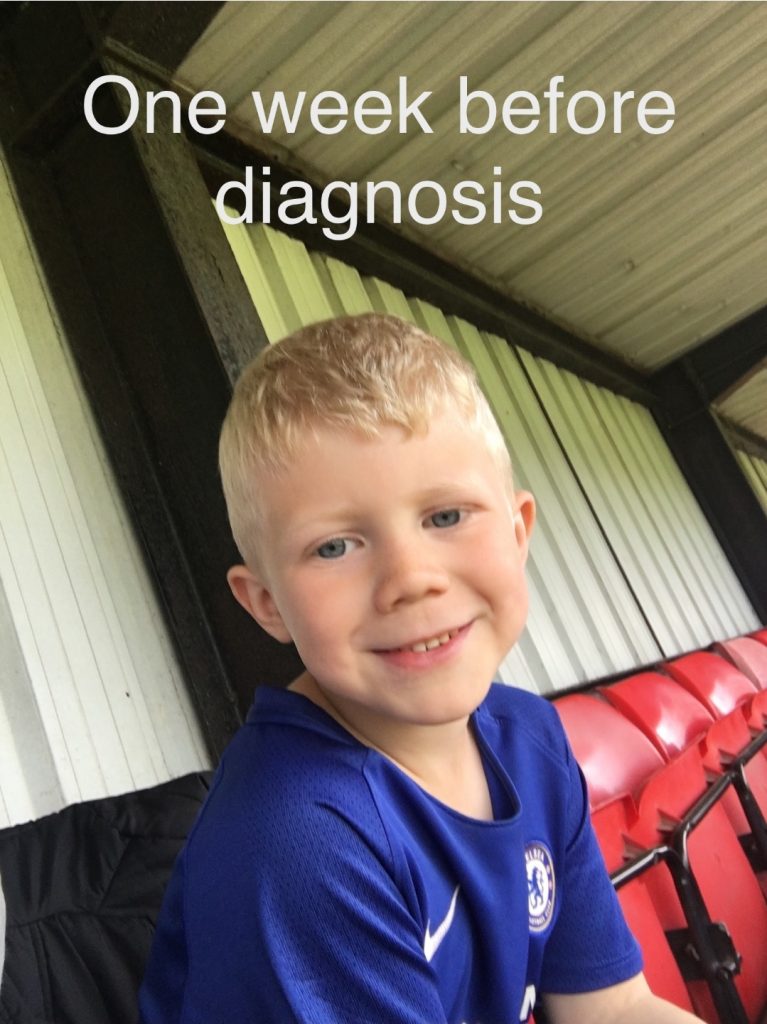
In May 2019 after bathing my 6 year old son Jake, we noticed his left testicle was bigger than his right one. 

We visited our local GP the following day where they examined jake and were unable to tell us anything other then they needed to refer Jake urgently to the paediatric team at our local hospital. Worry set in immediately.

Within a week we were seen by a paediatrician at the children’s hospital where we were informed straight away jake had a tumour in his left testicle. 

After being whisked away for ultrasound scans and blood tests we were told Jake would need to come in for an operation the following week where they would attempt to remove the tumour but also would need to remove the testicle itself.

The following week jake underwent his surgery where they removed a 5cm tumour from his left testicle and the testicle itself was also removed. It was now an agonising wait for them to biopsy the tumour for diagnosis.

Within a matter of days we were called back to the hospital to see a paediatric oncologist and our worst nightmare was confirmed. The tumour was cancerous and Jake was diagnosed with paratesticular rhabdomyosarcoma. 

A 22 week course of chemotherapy was required.

The following week was one hell of a week, on the Tuesday Jake was sent for a CT scan, Wednesday a MRI scan, Thursday he was taken back to theatre to have his central lines fitted (these would be used to administer his chemotherapy) then Friday we finished the week with a PET scan! 

We received a call the Monday after stating the PET scan had shown and area of concern in Jakes tummy and he was therefore sent back to theatre where they sent a camera into his tummy in 3 separate areas to check out the suspicious area. 

Fortunately it turned out to be nothing and we were given the ok to go ahead with chemotherapy.

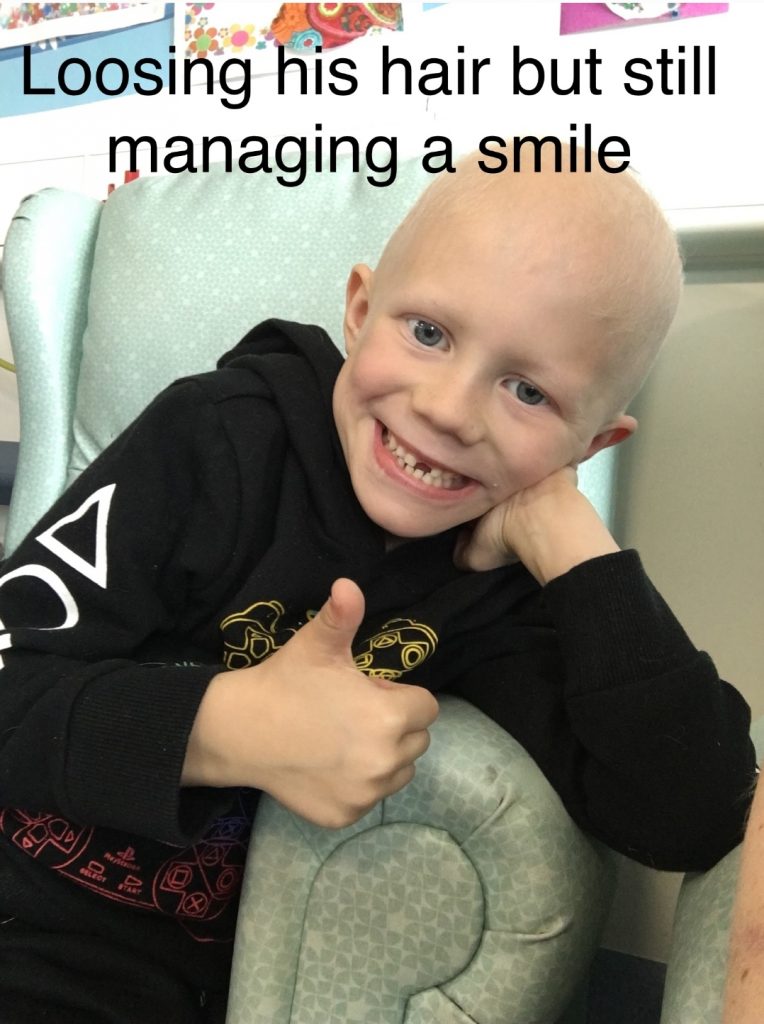
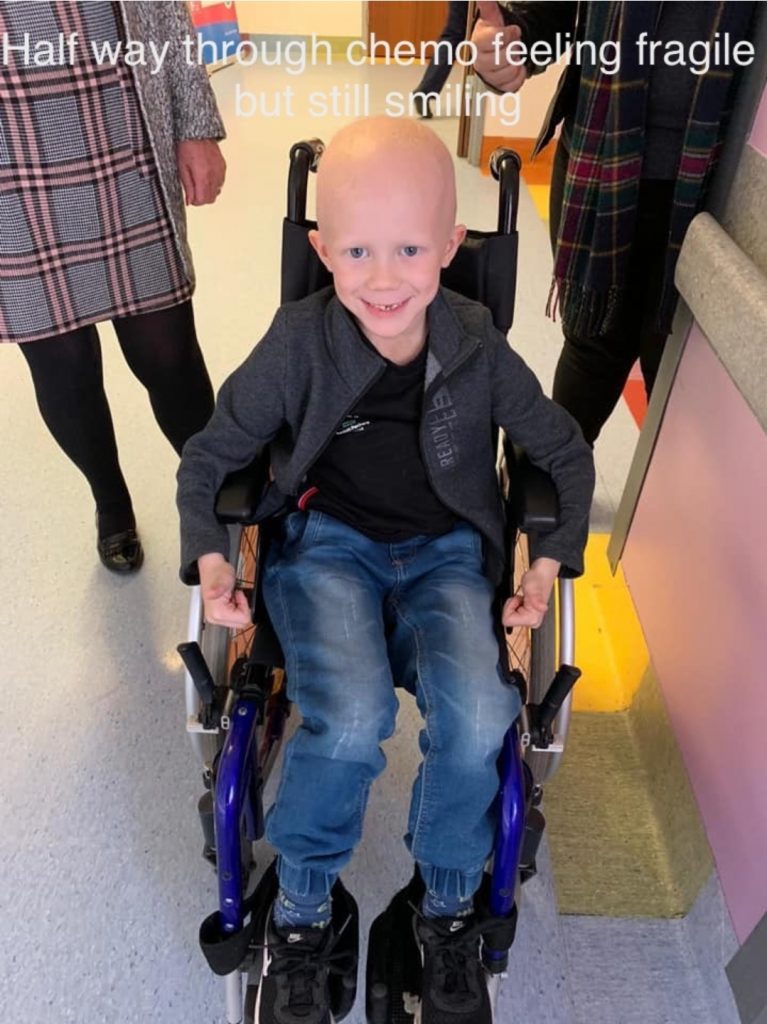
Chemotherapy started a week later. Every Tuesday every week for 4 weeks jake would go to have his chemo administered he would then get a 2 week break before starting the next cycle of chemotherapy. Jake completed 6 cycles in total. They were gruelling, they made him sick, more poorly than ever and of course the loss of his beautiful hair.

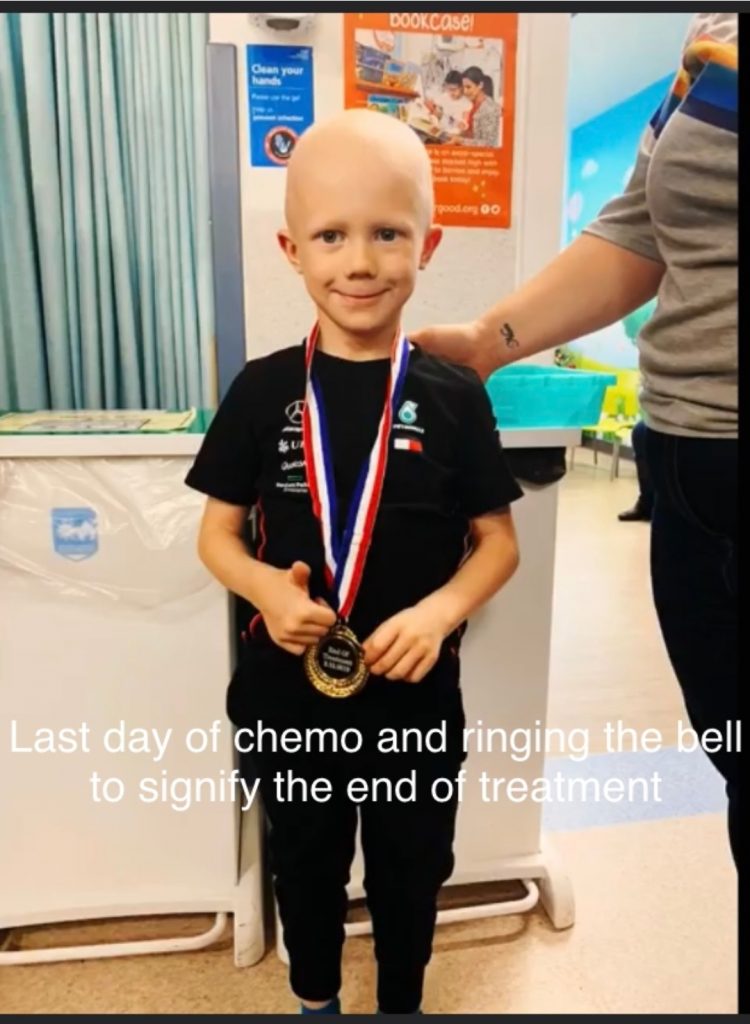
He fought like a warrior though and just before Christmas December 3rd 2019 jake was given his final dose of chemotherapy.

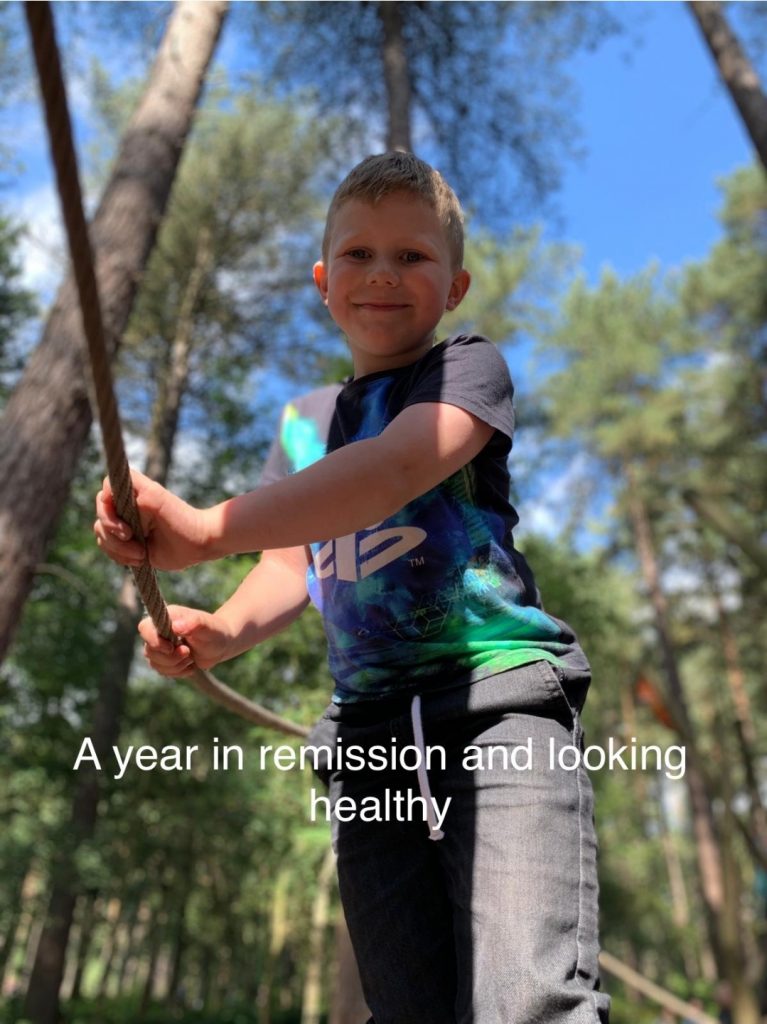
An end of treatment MRI scan took place in January 2020 which confirmed jake was clear of cancer and was now in remission.

A year on jake is recovering brilliantly and we couldn’t be more proud of him. 

It’s important to me to make other parents aware that testicular cancer isn’t just in older men. It happens in children too. So please be aware of the signs and what to look out for.

If your child is still young enough that you bath them then please check them over. If they are that bit older and now wash themselves please make they aware of what’s normal and what’s not and how to check themselves. It may be 5 minutes of embarrassment for them but it really can save lives. 

Kris’s Story

As part of our testicular cancer awareness month campaign, we have asked our survivors to share their stories.

This is Kris’s……

I first felt the lump in my right testicle December 2013. At this point it was very small but my wife made me go to the doctors to get it checked out. The doctors weren’t concerned and didn’t fast track me fir a scan as they thought it was a cyst. 

My scan appointment came through and it was four weeks away. During this time the lump grew quite significantly and to be honest I knew what it was going into the scan. 

Whilst I was getting a scan I was quizzing the doctor as to what he could see etc. He was very apprehensive to give me any information but I asked him straight up what are you going to put in the report. He was brilliant and talked me through the scan on the screen exactly what he could see. He told me there was a tumour. At this point I still wasn’t sure so I was scared but as I’m a positive person I was ready to tackle whatever it was. 

When I left the scan I called the spires in little Aston. I knew it well having had a few football operations there. I told them I needed to see an oncologist ASAP and luckily they got me in the next evening. At this point I was very nervous. If it’s cancer, has it spread? Am I going to see my children grow up, I had one and my wife was pregnant. 

I went to the hospital the next day and sat with the doctor and he said right let’s have a look. He took one look and about 3 seconds later he said those words. It’s cancer? Although I had that in my mind you are still shell shocked. My mind went into recovery process very quickly. When can you operate I asked the doc. Well as you arent a member  you will have to go back to nhs treatment which I knew would be a few weeks. I asked him again when he could do the surgery and I would foot the bill as I just wanted it gone. He said I have space next Thursday, great let’s do it. This was the Friday evening and surprisingly my next thought was football on the Saturday, we had a big game against Altrincham so I phoned the manager and told him and said I’m playing. Having playing at a decent level football was always my release and I think this was then same. Something else to think about. I then went to my moms and we all cried that evening but I knew with the support I had I was going to get through it. 

I didn’t sleep much that night worrying about the detail of what was to come. The operation wasn’t going to be an issue I had had a few but after that what happens. I was scared if it had spread or not. When I got to football all the lads knew and as they know me took the mick to some people this may seem harsh but this was what I needed. The lads were calling me the Russian , who do you nick a bollockov and saying right lads make sure you work your bollocks off today. I played the game and scored but walked off in tears. Emotionally I was drained and it just came down on me. After the game the news broke and I received so many messages from previous clubs I had played for it was great to have that support. 

Now it was scan time let’s see how I was looking. I had the ct scan which is weird in its self as the warm sensation makes you think you’ve had an accident. Then another ultrasound. Again whilst having the ultrasound I was talking to the doc asking if he could tell me anything. Again he was fantastic he said give me 15 mins and I will check ct scan. This was the longest 15 minutes ever. Please let it only be in my testicle is all I was thinking. He called me in a told me it was all contained. The relief was like nothing I had ever had, I cried as I was so happy. 

I then had the surgery the next day. The doc asked if I wanted a prosthetic one in which I declined. I joked that nobody sees it nowadays anyway being married not even the wife except Christmas. Again humour was how I dealt with things but in reality I was just praying they get it all out. The op went well and away I went. 

I felt relieved at this point as I knew there were no more rumours in my body but now it was a waiting game to see what type it was. I was told it would be a couple of weeks so I started chasing to find out with no success. 

Then I had a call from Paul Hutton at the QE who was brilliant and put my mind at rest. He said I would need to go in and meet the team. I got there hoping I wouldn’t have to have chemo but had decided if I had a choice I was gonna have it to make sure. I had read in certain situations they can offer surveillance if you didn’t want chemo. This decision was never on the table as mine was a terrotoma which is more aggressive and I also had vascular invasion which meant chemo, but still a great prognosis. 

Luckily the QE were doing a trial where instead of the standard 2 course (6 week) I could have 1 course at a higher dosage so 3 weeks. We went through everything and all I was thinking was am I going to get back for the playoffs at the end of the season. We were end of feb at this point. When are we starting then I said. Erm probably be a couple of weeks we will call you when we have a bed. 

Paul suggested I stored some sperm in case chemo killed it off. I did this which was the most awkward thing I’ve had to do. 

The call came you’re in on Monday. I was scared with the stories you had heard about chemo. I wasn’t bothered about my hair it was the rest of the side effects but knew if there were any stray cancer cells this would do the job and get rid of them. 

I turned up and the doctors came in a put my cannula in, my mom was crying at this point because she was scared I think. So it began the constant beeping of machines, the changing of chemo bags, the constant need to go for a wee, feeling sick. People say chemo is tiring I believe it’s the lack of sleep for 4 days that does it rather than the drugs. 

I got to know the guys in my ward and I felt a little guilt as all I had to go through was losing a testicle and have a round of chemo. One of the guys had been told he had months to live, one had lost a leg and the other was having multiple chemo cycles. I was lucky I had caught it early. Whilst I was in hospital my pals came but a big boost came when I had heard that at the Walsall home game on 15 minutes (my number) they had a minutes applause and this continued for the rest of the season. 

One thing that sticks in my mind about hospital was it was pancake day. I was in the ypu unit and next to this was the children’s ward. A lady who was next door with her daughter came and made us all pancakes. This was the most upsetting thing as I thought about being there with my own kids and probably how my mom still felt even though I was grown up. 

I was sent home with a bag of drugs and a red chemo card for emergencies. I had to return the next few weeks for a booster. I went straight home and shaved my hair off as I knew what was coming. As my wife was pregnant I was told to sleep in the spare room just as I would potentially perspire chemo drugs and didn’t want to put anyone at risk. 

All I wanted to do was eat and sleep for a few days my body craved pizza so it was Pizza Hut buffet then sleep. I soon released it was the anti sickness drugs that made me feel so bad and stopped taking it and dealt with the sickness.  On day 7 I had to give myself a neuroblast injection and I didn’t read the side effects. The next day I decided I was getting back on it and went for a run. I was breathing heavily after about 10 yards but plodded on to do a couple of miles. My back went into spasm I was worried as signs of spreading was back pain. Where’s my red card I wanted to know what was wrong. It was the injection but it knocked me off my feet. 

More and more appointments followed the same questions how do you feel. I’m good I’m back in the gym and getting stronger. Paul would say Kris relax and let your body recover but all I could think about was playing again. Eventually Paul cracked and said I would need an extra blood test to confirm my platelates were ok to start contact training. I was buzzing back with the lads. 

I rocked up and surprise surprise the jokes started bloody hell gaffa how have you managed to sign Jon joe shelvey due to my bald appearance one lad shouted. I was really heavy due to the drugs and the pizza but so happy to be with the lads. I had also started back to work a few weeks before but the difference in how I was treated at work to football was so different. At work people tried to pamper me which I hated and tried to give me easier work. I remember going to see the GM at the time to say I’m at work let me do my proper job. He said that if my doctor agreed that was fine so my doctor wrote me a letter.

I needed it for my own sanity although people thought I was nuts. 4 weeks after day one of chemo I was back at work and a week later starting to train again. It was my release and gave my focus on recovery. 

Once I was given my prognosis which was very good and I was lucky I treated it more like an injury and gave myself a timescale for recovery. Maybe this was the mentality you have from being so highly involved in sport for your whole life. 

I believe the more I sat on the sofa the worse I felt so I had to get up and be active. Yes I would be tired and constantly fall asleep on the sofa. For months I would get splitting head aches and have to go to bed in the afternoon. 

My initial treatment plan had finished and I was cancer free. I had my itinerary for the next 5 years checkups. I pinned it on the notice board ready to tick them off. The first couple I did then it became the norm. I even took my little girl a few times in school holidays as she liked to go on the train so treated it like a little trip. Even though I felt great those trips to the hospital were very nerve racking. In the back of your mind I hope they don’t find anything. This was very evident when it came to having ct scans. 

As time went by I became more relaxed and felt very comfortable with what I had been through. People are surprised how open I am about it all but I feel that if it helps someone then great. I had Mark Porter and checkemlads to support me at the start which was great. I was able to ask lots of questions I was concerned about before going to meet doctors. Ironically a few years before I was pictured in the warm up at port vale wearing the checkemlads T-shirt which Mark found out. 

I feel that everyone deals with these things in different ways I tried to stay positive and  give myself a focus. I gave myself a goal when I had the operation of the play offs and I returned to play after 2 and a half months. Looking back now it was daft as my body hadn’t recovered properly till about 6 months after that. 

Cancer is very cruel having lost someone close to it but I think the more people can talk about it and have early tests and check themselves the greater chance everyone has in fighting these terrible disease. 

BTC Pro/Celebrity football match

As part of our 10th anniversary celebrations we are holding a pro/celebrity football match at Hednesford Town Football Club on the 26th June.

Gates open at 12pm and the game will kick off at 2pm

We have a great line up of ex professional footballers and celebrities who are giving up their time free of charge to help us raise much needed funds.

They will be playing a team of players who have raised £100 each to play (they also get to keep their kit). You can secure a place on the team here. NO LONGER AVAILABLE

We are very grateful to Hayden and his club for giving us the pitch, staff and security from his team at Lionheart security all free of charge.

You can get tickets here….

VIP – seated with the celebrity guest, players and families

General Adult tickets

OAP/Child ticket

Standard Family Ticket

Our pro/celebrity team currently is…..

Neil (Razor) Ruddock – Ex Professional Footballer (Manager)

Sean Heydon – Magician

Andy Reid – Ex Professional Footballer

Paddy Wallace – Actor

Mel Eves – Ex Professional Footballer

Ricky Rayment – TOWIE

Micky Dumoulin – Singer

Kris Taylor – Ex Professional Footballer

Lewis Reeves – Actor

Leon Sturridge – Ex Professional Footballer

Matt Bailey – Ex Professional Footballer

Steve Clamp – ITV News Anchor

Leo Goldenchild – Singer

Dave Busst – Ex Professional Footballer

Cream Financial Solutions join Balls to Cancer

We are extremely pleased to be working with the local financial services team at Cream Financial Solutions to bring you the best information and advice.

So if you need any of the help shown below get in touch with them today and DON’T FORGET to tell them Balls to Cancer sent you.

Working nationally whilst remaining a local firm at heart.  Providing bespoke protection solutions to their Clients for over 10 years, focussing on their clients and living by their 3 principles:

Making a difference
Challenging the norm
Creating wealth – particularly at a time when it’s needed the most

They are passionate about what they do which has been recognised by winning awards since 2013.

Being there for their clients, when they need them the most, is deeply rooted in their DNA having paid out over £3 MILLION in successful claims.

So how can they help you?

How would you be affected if you lost your income?
Find out more or talk to us today about the numerous solutions available.

Protecting against Cancer, Heart Attack & other illnesses

Protecting against Cancer, Heart Attack & other illnesses

What would be the impact of Cancer, Heart Attack or other critical illness?
Find out more or talk to us today about the numerous solutions available.

Protecting against Death

Protecting against Death

What would happen if you or someone from your household passed away?
Find out more or talk to us today about the numerous solutions available.

Re-mortgages

Re-mortgages

We search the market to find you the best possible mortgage.
Talk to us today about remortgage advice tailored to you.

Business Protection

Business Protection

Let the taxman help pay for your life insurance.
If you own a small business there’s a smarter way to buy insurance for yourself and your key employees.
Talk to us today about the various solutions available.

Mortgages

Mortgages

FInd the right mortgage for you.
Talk to us today about mortgage advice tailored to you.

Wills & Estate Planning

Wills & Estate Planning

Through our partnership with My Last Will, we are proud to provide state-of-the-art will writing and estate planning services.
Talk to us today.

Protecting Your Home & Contents

Protecting Your Home & Contents

Is your home and contents properly protected?
Cheap isn’t necessarily right!
Talk to us today.

Funeral Plans

Funeral Plans

Through our partnership with Empathy UK, we are able to offer a comprehensive range of pre-paid funeral plans.
Talk to us today about paying for your funeral at today’s prices.

Private Medical Insurance

Private Medical Insurance

Do you want access to the best possible medical treatment?
Talk to us today about the numerous solutions available.

Wealth Management

Wealth Management

Through our partnership with IDC Wealth we are able to provide quality advice on investment planning, pensions and inheritance tax planning.
Talk to us today

Secured Loans

Secured Loans

We have access to the best providers of secured loans in the UK.
Talk to us today

A & A Walters Help Us This Christmas

The amazing A & A Walters funeral directors are helping us raise desperately needed funds this Christmas.

They have a fantastic virtual rememberance tree where you can add a message for those you’ve lost.

Please help us and remember someone special this Christmas right here

Thank you.

Great Run Solo – December Accumulator Challenge

Great Run Solo – December Accumulator Challenge

What is it?
It’s a Christmas themed virtual running challenge – participants have to complete 12 runs (or more) of any distance between 1 – 25 December to earn a unique medal. The challenge includes an optional distance challenge, with a bespoke digital certificate awarded to anyone who completes a distance award.

When?
The challenge runs from 1-25 December. Entries are open now and close on Tuesday 8 December at 10am.

But wait, there’s myrrh… the challenge includes an optional distance challenge. Depending how far you run over your 13 (or more) runs, you will be awarded with a bespoke digital finishers certificate to download and share:
• A round of santa-plause – 30 Miles
• Run Run Rudolph – 60 miles
• There’s snow stopping you – 100 miles

Secret Santa Medal
Everyone who enters will be sent a unique medal mid-way through the challenge that can be worn with pride or hung on a Christmas tree. We have created 3 different festive medals and inspired by Secret Santa tradition, the medal that lands on the doormat will be a complete surprise.

Entry
The challenge costs £15 to join – the joining fee includes a unique finishers medal, access to training plans & tips, and access to an online run tracking tool. Link to enter: https://www.greatrun.org/virtual-running/accumulator/december