Miss England Competition Supports Balls to Cancer

We are extremely pleased to announce that we have been picked as the Charity partner of this year’s Miss England finals.

The finals will take place at the beautiful Grand Station in Wolverhampton in May.

Miss England Final 16-17 May: 

Miss England Contest

The Miss England Contest is the most respected beauty contest ‘Title’ in England. It is the ONLY competition in the Country to send its winner to represent England in the Miss World Contest.

The organiser Angie Beasley has been the director of Miss England since 2002 . In the 1990s , Angie organised Miss United Kingdom on behalf of Miss World . The competition is a registered patented title with the UK Patent office and owned by Miss World who in 2023 will be celebrating their 71st year .

(Photo of Angie Beasley above by Studio NI Photography.)

Angie was one of the judges for Miss England 2019 and help select NHS Doctor Bhasha Mukherjee to be the winner .   In the 1990s Angie organised Miss United Kingdom on behalf of Miss World along with Miss Scotland and Miss Wales . In 2002 , Angie became the director of Miss England Limited , when Julia Morley spilt the 4 UK countries , so now 4 girls get the opportunity to go to Miss World with the highest scoring becoming Miss UK .

The competition is noted for emphasising the importance of charity work, now a major part of the competition.  During the last few years, the Miss England competition alone has raised in excess of £1m for various children’s charities using the Miss World ‘Beauty with a Purpose’ ethos founded by Julia Morley. Beauty with a Purpose is now a charity that  help disadvantaged children & young people across the World.

Miss England has been a regular supporter of Variety Children’s Charity, having raised over £450k  at Miss England heats with ‘Miss England’ herself appearing at high profile events, organised by many charities.

Miss World is one of the world’s biggest TV shows, broadcast to over 120 countries and has been in existence since 1952.     In England we can usually watch on London Live Channel E!, or on the Miss World website www.missworld.com  The event hosts a top prize of $100,000 and every year attracts thousands of entrants in over 120 countries. Prolific winners of Miss World include Aishwarya Rai, Zhang Zilin and Priyanka Chopra who have all since then made themselves wholly successful in the filming and modelling industry. Oscar winners Halle Berry and Michelle Yeoh were also Miss World contestants in their earlier life!  More well known Miss England celebrity winners include , Georgia Horsley  ( now Georgia Jones married to Danny Jones from McFly) ,  Danielle Lloyd , Amy Jackson one of Bollywoods biggest stars who was third runner up in Miss England in 2010 , Laura Coleman , top model with Models one , and many contestants over the years have appeared on well known TV shows .

Amy Willerton who starred on “Im a Celebrity Get Me Out of Here ” also represented London in Miss England 2012 and later went on to win Miss Universe GB .

The Miss England contest is now organised differently compared to previous years since the pandemic .

A series of qualifying virtual heats will be held on the Miss England app  on a monthly basis to find the semi finalists. There will also be wildcard opportunities for contestants promoted on social media where a contestant may win a place in the semi final by becoming a WILDCARD entry   .  The Miss England app is FREE to download from Google Play or the App store and voters receive one FREE daily vote for their favourite contestant .  VOTE NOW for your favourite !

At the semi final the National finalists will be selected . The next semi final is being held at Viva Blackpool on 16th October 2023 to celebrate Jessica Gagens one year reign. Jessica will be representing England at the 71st Miss World , due to be held in India in December.

There will also be a number of direct to the final heats will also be held such as the first ever make up free LONDON heat , FAB UK Magazine will be holding a Top Model heat and other city winners will be invited from across the country to take part in the next final , which is now scheduled to be held in the Spring of 2024.

To enter the next Miss England please first enter by completing the form on the home page of our website and if accepted we will  advise us of the next stage.

You can compete in more than one round to increase your chances.

The reigning Miss England is AEROSPACE ENGINEERING STUDENT Jessica Gagen who represented Lancashire in the 2022 final TWICE .

Click here to read an article about Jessica in the media when she became the winner of Miss England 2022 DAILY MAIL 

The winner of Miss England each year joins Miss Scotland, Miss Wales & Miss Northern Ireland & almost 100 contestants from around the world to compete for the Miss World coverted crown with first prize of $100k.

Balls to Cancer Charity Ball 2024

We are very pleased to announce that the tickets are on sale NOW for our 2024 Charity Ball!

The ball will be back at the very beautiful Grand Station in Wolverhampton and will be on Friday 29th November.

We will have our usual amazing mix of wonderful food, great live entertainment and brilliant celebrity guests.

So if you would like to join us celebrating another year of helping, funding, supporting people with cancer, then get your tickets before the prices increase !

Tickets are available here or for a reduced table of ten ticket are available here

We need your help to keep our Free holidays for anyone with cancer open for 2024

We are now planning for 2024 and need your help raising the vital funds we need to be able to open our free holiday homes next year.

Sadly again this year the costs have risen for the coming year and we need you and your friends to help us raise the funds to keep this vital break for people with cancer going through treatment.

For some this is their last holiday and we desperately need to make sure this is still available.

if you can help please donate here https://www.justgiving.com/campaign/free-holidays-for-families-with-cancer

Aspartame hazard and risk assessment results released

Assessments of the health impacts of the non-sugar sweetener aspartame are released today by the International Agency for Research on Cancer (IARC) and the World Health Organization (WHO) and the Food and Agriculture Organization (FAO) Joint Expert Committee on Food Additives (JECFA). Citing “limited evidence” for carcinogenicity in humans, IARC classified aspartame as possibly carcinogenic to humans (IARC Group 2B) and JECFA reaffirmed the acceptable daily intake of 40 mg/kg body weight.Aspartame is an artificial (chemical) sweetener widely used in various food and beverage products since the 1980s, including diet drinks, chewing gum, gelatin, ice cream, dairy products such as yogurt, breakfast cereal, toothpaste and medications such as cough drops and chewable vitamins.“Cancer is one of the leading causes of death globally. Every year, 1 in 6 people die from cancer. Science is continuously expanding to assess the possible initiating or facilitating factors of cancer, in the hope of reducing these numbers and the human toll,” said Dr Francesco Branca, Director of the Department of Nutrition and Food Safety, WHO. “The assessments of aspartame have indicated that, while safety is not a major concern at the doses which are commonly used, potential effects have been described that need to be investigated by more and better studies.”The two bodies conducted independent but complementary reviews to assess the potential carcinogenic hazard and other health risks associated with aspartame consumption. This was the first time that IARC has evaluated aspartame and the third time for JECFA.After reviewing the available scientific literature, both evaluations noted limitations in the available evidence for cancer (and other health effects).IARC classified aspartame as possibly carcinogenic to humans (Group 2B) on the basis of limited evidence for cancer in humans (specifically, for hepatocellular carcinoma, which is a type of liver cancer). There was also limited evidence for cancer in experimental animals and limited evidence related to the possible mechanisms for causing cancer.JECFA concluded that the data evaluated indicated no sufficient reason to change the previously established acceptable daily intake (ADI) of 0–40 mg/kg body weight for aspartame. The committee therefore reaffirmed that it is safe for a person to consume within this limit per day. For example, with a can of diet soft drink containing 200 or 300 mg of aspartame, an adult weighing 70kg would need to consume more than 9–14 cans per day to exceed the acceptable daily intake, assuming no other intake from other food sources.IARC’s hazard identifications are the first fundamental step to understand the carcinogenicity of an agent by identifying its specific properties and its potential to cause harm, i.e. cancer. IARC classifications reflect the strength of scientific evidence as to whether an agent can cause cancer in humans, but they do not reflect the risk of developing cancer at a given exposure level. The IARC hazard evaluation considers all types of exposures (e.g. dietary, occupational). The strength-of-evidence classification in Group 2B is the third highest level out of 4 levels, and it is generally used either when there is limited, but not convincing, evidence for cancer in humans or convincing evidence for cancer in experimental animals, but not both.“The findings of limited evidence of carcinogenicity in humans and animals, and of limited mechanistic evidence on how carcinogenicity may occur, underscore the need for more research to refine our understanding on whether consumption of aspartame poses a carcinogenic hazard,” said Dr Mary Schubauer-Berigan of the IARC Monographs programme.JECFA’s risk assessments determine the probability of a specific type of harm, i.e. cancer, to occur under certain conditions and levels of exposure. It is not unusual for JECFA to factor IARC classifications into its deliberations.“JECFA also considered the evidence on cancer risk, in animal and human studies, and concluded that the evidence of an association between aspartame consumption and cancer in humans is not convincing,” said Dr Moez Sanaa, WHO’s Head of the Standards and Scientific Advice on Food and Nutrition Unit. “We need better studies with longer follow-up and repeated dietary questionnaires in existing cohorts. We need randomized controlled trials, including studies of mechanistic pathways relevant to insulin regulation, metabolic syndrome and diabetes, particularly as related to carcinogenicity.”The IARC and JECFA evaluations of the impact of aspartame were based on scientific data collected from a range of sources, including peer-reviewed papers, governmental reports and studies conducted for regulatory purposes. The studies have been reviewed by independent experts, and both committees have taken steps to ensure the independence and reliability of their evaluations.IARC and WHO will continue to monitor new evidence and encourage independent research groups to develop further studies on the potential association between aspartame exposure and consumer health effects. 

(Via World Health Organisation)

Howden Coffee and Balls to Cancer: A Collaboration Worth Drinking to

Howden Coffee, UK-based coffee specialists, has partnered with Balls to Cancer in an effort to further raise support for those living with, and affected by cancer. With every purchase made by their customers, Howden Coffee will donate 5% of their sales to Balls to Cancer, supporting the mission of raising awareness and supporting those affected by cancer.Eliott Spencer, Founder of Howden Coffee, shared his thoughts on the partnership, saying, “We wanted to find a way to give back to the community and make a meaningful impact. We believe that partnering with Balls to Cancer is the perfect way to do this, as we are able to support their amazing work and make a difference to the lives of those affected by cancer.”The partnership between Howden Coffee and Balls to Cancer is a beneficial collaboration for both parties that allows coffee lovers to get more than just a bag of coffee. Howden Coffee are able to give back to the community while allowing more people to support charities in a truly convenient way. Howden Coffee are committed to making a difference and supporting causes that matter. Through the partnership, Balls to Cancer can become even more able to provide support and care to those in need.Cancer is a disease that affects millions of people around the world, and partnerships like this are crucial to making sure that the valued support provided by Balls to Cancer gets the backing to grow and continue the invaluable work carried out. The partnership between Howden Coffee and Balls to Cancer is a shining example of how businesses can make a difference. Through this partnership, there is the ability to raise awareness about cancer, support those affected by the disease, and make a meaningful impact in the lives of individuals and families. With every bag of coffee sold, Howden Coffee are able to support the mission of Balls to Cancer and provide help to those in need.To get your coffee fix while supporting an amazing charity, visit Howden Coffee and make a difference.

Could you Sponsor a football team?

Balls to cancer currently has three football teams a mens team, under 18s boys team and a ladies team. All three of them are looking for sponsors for the new season.

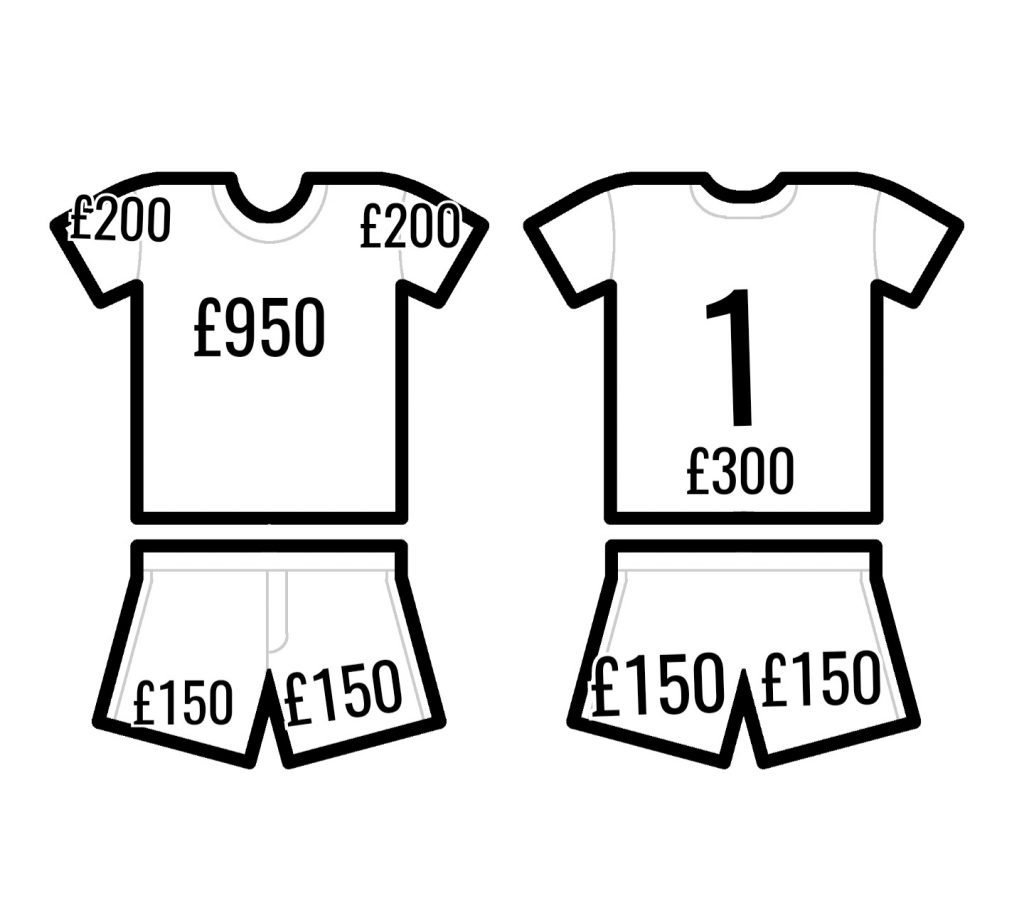
We have many sponsorship options available starting from £150 upto the main shirt sponsor at £950.

The main sponsor will get in return a free shirt, a write up here on our website with links to their business, weekly mentions on our social media.

The smaller sponsors will get a mention on our team write up on our website and a monthly social media mention.

So if you can help any or all of our teams please contact us today

Help us to raise the funds needed to keep our holiday homes open

Since December 2022 we have been desperately trying to raise funds for our two beautiful holiday homes in Burnham on Sea. These holiday homes are a place where families or individuals with cancer can go for respite during treatment absolutely free. For some this is a break from Chemotherapy and the stresses, strains, pains and sickness that come with it. For some it is there first family holiday and others their last.

These holidays are a vital break for these families and we need your help to keep them open.

Sadly like every other part of our daily lives the costs have gone through the roof way beyond what we anticipated with fees, cleaning, repairs etc…. so we are in danger of having to close them.

We need to raise £20,000 and we’re a long way off so if you see this please, click the link and make a donation here

Thank you

Risk of cervical cancer found to be twice as high in women with mental illness

Women with mental illness, neuropsychiatric disability, or substance abuse are less likely to go for gynecological smear tests for cervical cancer and run more than twice the risk of developing the disease. The findings are presented in The Lancet Public Health by researchers from Karolinska Institutet, who stress the importance of proactively approaching these women as a preventative measure against cervical cancer.

In May 2020, the WHO approved a global strategy for eliminating cervical cancer as a women’s health problem. Part of the strategy is a requirement that 70 percent of women are screened for the disease at least once before age 35 and twice before age 45.According to the researchers, inequality of care is one of the major hurdles to this objective.”Our study identified a high-risk group that needs extra attention if we’re to succeed in eliminating cervical cancer,” says one of the study’s first authors Kejia Hu, postdoc researcher at the Institute of Environmental Medicine at Karolinska Institutet.The observational study included over four million women born between 1940 and 1995. From this population, the researchers calculated the risk of cervical cancer and precancerous cervical lesions as well as participation in screening programs for cervical cancer, comparing women diagnosed by a specialist with mental illness, neuropsychiatric disability, or substance abuse with women without such diagnoses.”Our results suggest that women with these diagnoses participate more seldom in screening programs at the same time as they have a higher incidence of lesions in the cervix,” says Dr. Hu. “We thus found that they have twice the risk of developing cervical cancer.”An elevated risk was observed for all diagnoses, but the greatest association was noted for substance abuse. Women with mental illness should be made more aware of the need to undergo regular gynecological screening, according to the researchers:”It would lower their risk of cancer,” says one of the paper’s authors Karin Sundström, senior researcher at the Department of Laboratory Medicine, Karolinska Institutet. “Similarly, if healthcare professionals are more aware of the cancer risk in these patients, they can step up preventative measures and consider how these could be delivered to potentially under-served patients.”The strength of the study lies in the sheer size of the cohort and the length of the time-span period over which the participants were studied. One limitation is that the researchers did not have full data about other risk factors for cervical cancer such as smoking, hormonal contraceptives, and sexually transmitted diseases.

Processed red meat intake linked to increased incidence of blood cancers

Processed red meat intake is associated with an increased incidence of acute myeloid leukemia (AML) and myelodysplastic syndrome (MDS) in a Japanese population, according to a study published online March 7 in Environmental Health and Preventive Medicine.

Yoshimitsu Shimomura, M.D., from the Graduate School of Medicine at Osaka University in Japan, and colleagues examined the association between AML/MDS incidence and meat, fish, or fatty acid intake using data for 93,366 participants from the Japan Public Health Center-based prospective study. Participants were followed for 1,345,002 person-years.The researchers identified 67 AML and 49 MDS cases during the follow-up period. Increased intake of processed red meat was associated with an increased incidence of AML/MDS, with a hazard ratio of 1.63 for the highest versus the lowest tertile. No associations were seen for intake of other foods and fatty acids with AML/MDS.”Our results showed that a higher processed red meat intake was associated with an increased incidence of AML/MDS,” the authors write. “On the other hand, other intakes of interest had a null association with the incidence of AML/MDS.