Blood test for cancer that is 10 times more sensitive developed by scientists

A new blood test for cancer that is 10 times more sensitive than existing technology has been developed by Cambridge scientists – potentially paving the way for pinprick tests that can tell whether patients are relapsing.

The scientists developed the approach using personalised genetic testing of a patient’s tumour to search blood samples for hundreds of genetic mutations in tumour DNA released by cancer cells into the bloodstream.

The technique is so sensitive that in some cases experts pinpointed a single mutant DNA molecule among a million pieces of DNA. They say it could lead to tests that more accurately determine if a patient is likely to relapse after having treatment.

Detecting circulating tumour DNA in blood samples is known as a liquid biopsy and is a key part of monitoring patients, in particular after they have received treatment, as it can show if it has been successful or if they are at risk of a relapse.

However, the approach is dependent on having a high enough number of mutant pieces of DNA to detect. If it is too low, it could produce a negative test even if patients have residual cancer

The research, published in the journal Science Translational Medicine, said that, by analysing the genetic make-up of an individual’s tumour and targeting personal mutations, the biopsies can become more sensitive.

Until recently, liquid biopsies searched for up to 100 mutations at most, but the new technique looks for hundreds and sometimes thousands of mutations in each blood sample, increasing the chances of success.

Researchers hope the approach will eventually mean less blood is required, enabling tests to be carried out on pinprick blood samples carried out by patients at home and sent to a laboratory for analysis.

This would mean patients travelling fewer times to hospital for checks and allow them to be tested more often.

Coronavirus: Major disruption to cancer care revealed

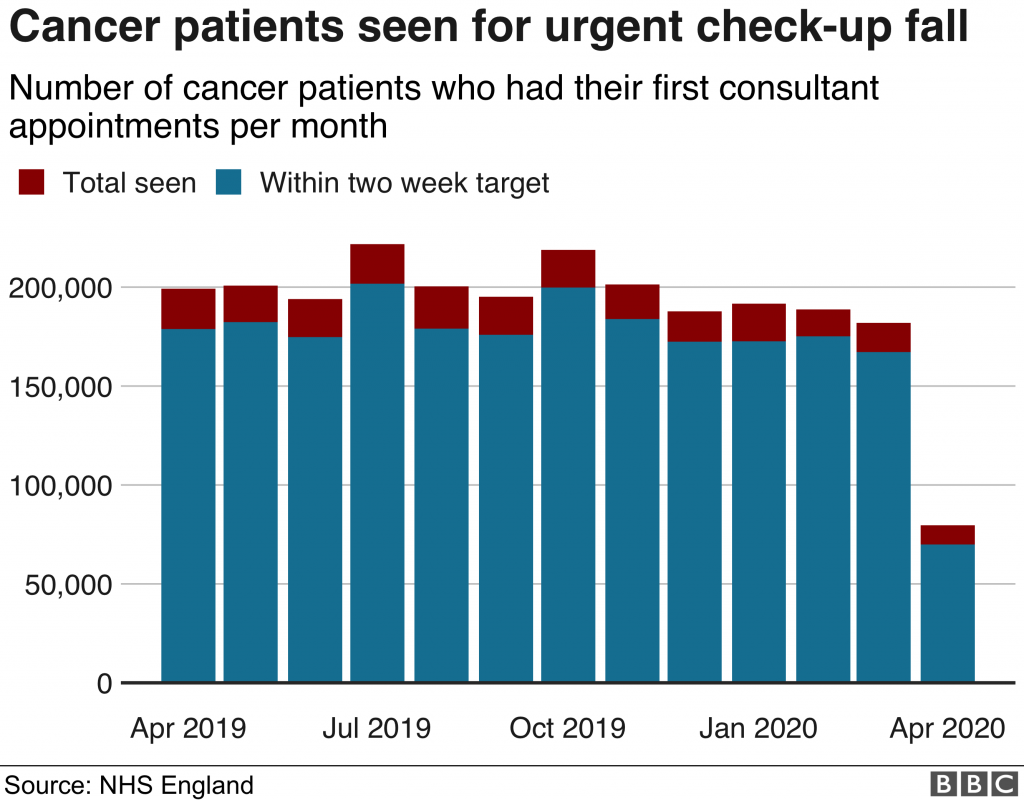
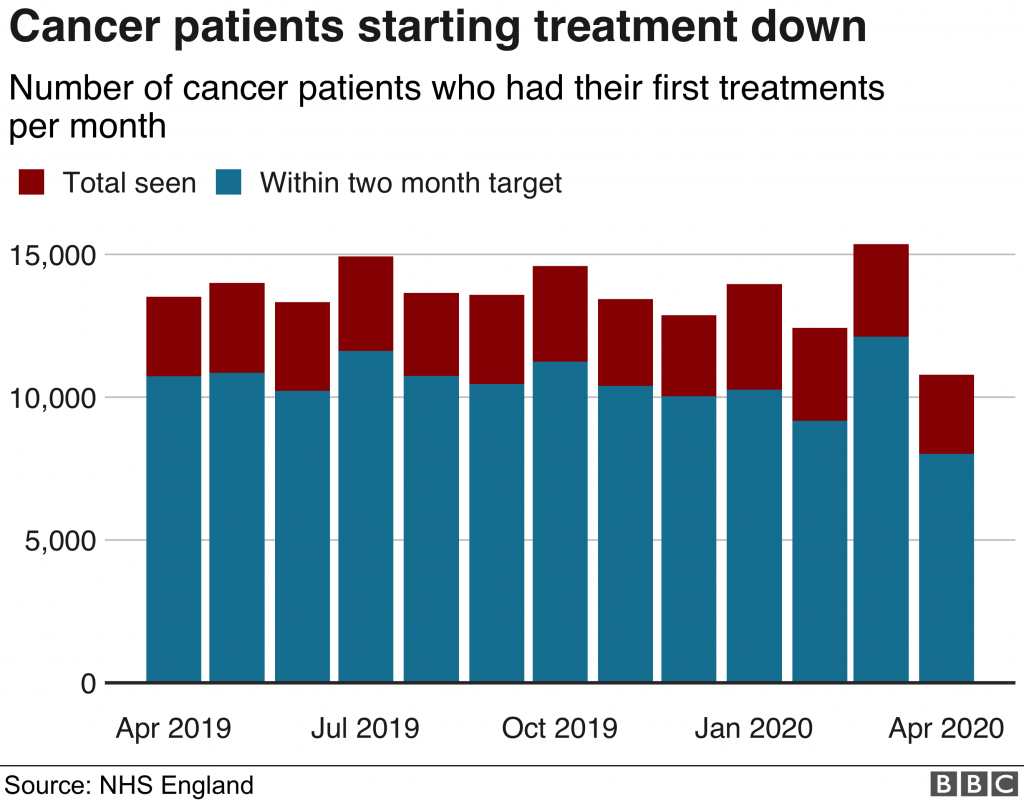
Cancer care in England has faced major disruption during the pandemic with big drops in numbers being seen following urgent referrals by GPs, figures show.

The number of people being assessed by a cancer doctor after referral fell to 79,500 in April – a drop of 60% compared to the same month last year.

Meanwhile, patients starting treatment dropped to 10,800 – 20% below 2019.

The NHS said it had tried to protect services – and some of the impact was due to people not seeking treatment.

NHS England said a number of innovative approaches were being introduced to keep cancer care running.

This has included delivering more chemotherapy in the community and people’s homes as well as creating “Covid-free” wings in hospital to protect patients.

NHS England chief executive Sir Simon Stevens said staff had gone to “great lengths” to deliver care.

And he urged people to come forward for treatment amid concerns fear of the virus is deterring people from seeking help.

Figures for elsewhere in the UK have not been published yet.

Charities warned the disruption to services would have a devastating effect.

Thousands of patients have also seen their on-going treatment stopped.

Baroness Delyth Morgan, of Breast Cancer Now, said her charity has been deluged with calls from people worried about not getting treatment.

“It is extremely concerning,” she said.

Lynda Thomas, of Macmillan Cancer Support, said the pandemic had “wreaked havoc” on services.

“Many people with cancer are being left to wait for next steps in fear, worrying about the long-term implications for their health, their families and their future.”

Joanne Addis, 54, from Stockport, was diagnosed with secondary breast cancer in 2017 only weeks after having surgery for primary breast cancer.

She has been given a drug called palbociclib ever since to slow down the cancer, but her treatment had to be stopped in April because it left her susceptible to coronavirus.

“I wasn’t happy. It has kept my cancer stable for three years. I try not to think what will happen.

“There are a lot of people like me who’ve had to pause their cancer treatment and not all of us will have good results at the end of this.

“I’m just hoping that the risk of coronavirus drops low enough soon so I can restart my treatment.”

How services have been adapted

In England – and elsewhere in the UK for that matter – NHS bosses have sought new ways to deliver cancer care.

“Covid-free” wings have been set up in hospitals to allow cancer patients to be treated.

These have been organised by 21 cancer hubs in England with lead cancer hospitals helping to coordinate care.

For example, in London this has been done by the Royal Marsden, Guy’s and St Thomas’ and University College London Hospitals.

There has also been a focus on delivering care in the community and people’s homes – with “chemo-buses” used in some places to allow staff to tour neighbourhoods providing chemotherapy from the back of an adapted van.

A targeted form of radiotherapy has also been rolled out, which requires fewer courses of treatment meaning patients do not have to visit hospital so often.

A&E and routine ops hit

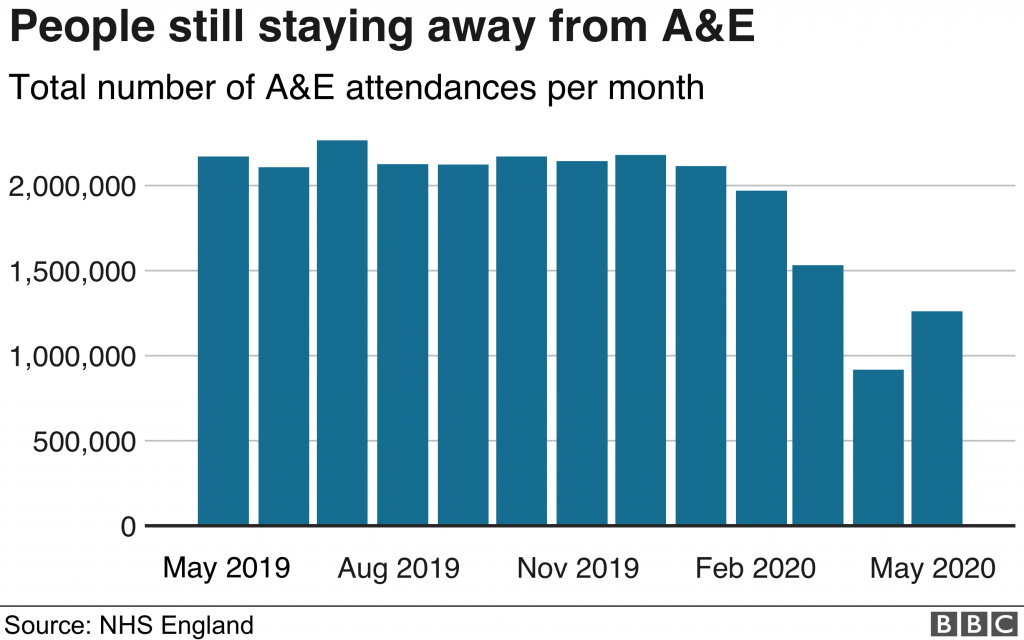
The figures published also include data for A&E and routine operations.

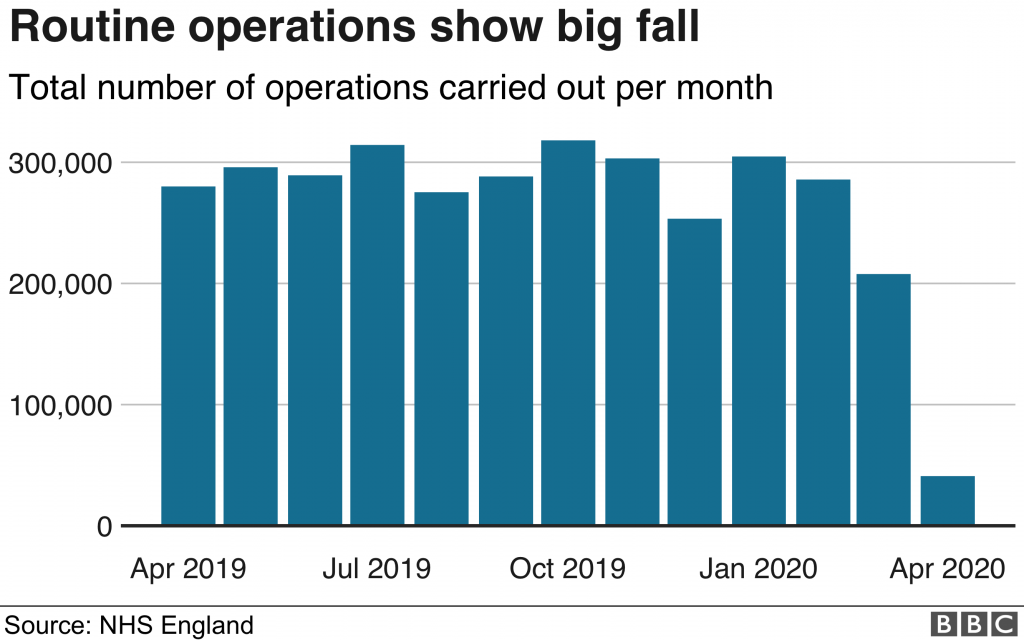
Routine operations were cancelled en-masse during April to help free up space for the expected surge of coronavirus patients.

Just 41,000 underwent surgery – down from 280,000 in April 2019.

Routine work is now in the process of being re-started, although NHS bosses have said the waiting list could more than double in size by the start of next year as hospitals are struggling to get back to full capacity because of the strain of dealing with the pandemic.

Source : BBC

Stages of Cancer

When you’re diagnosed with cancer, your doctor will tell you what stage it is. That will describe the size of the cancer and how far it’s spread.

Cancer is typically labeled in stages from I to IV, with IV being the most serious. Those broad groups are based on a much more detailed system that includes specific information about the tumor and how it affects the rest of your body.

It’s important to understand your cancer stage for several reasons:

  • Treatment: It helps your doctor decide which treatment will work best. An early-stage cancer may call for surgery while an advanced-stage cancer may need chemotherapy.
  • Outlook: Your recovery will depend in part on how early the cancer is found. Your stage gives you an idea of your possible outcomes.
  • Research: Most hospitals work with a national database that keeps track of which treatments are used and how well they work. Researchers can compare similar cases to find the most effective treatments.

Staging Groups

Your doctor will use information from test results (clinical stage) or possibly the tumor itself (pathologic stage) to decide your overall stage.

Most cancers that involve a tumor are staged in five broad groups. These are usually referred to with Roman numerals. Other kinds, like blood cancers, lymphoma, and brain cancer, have their own staging systems. But they all tell you how advanced the cancer is.

  • Stage 0 means there’s no cancer, only abnormal cells with the potential to become cancer. This is also called carcinoma in situ.
  • Stage I means the cancer is small and only in one area. This is also called early-stage cancer.
  • Stage II and III mean the cancer is larger and has grown into nearby tissues or lymph nodes.
  • Stage IV means the cancer has spread to other parts of your body. It’s also called advanced or metastatic cancer.

A physical exam and several tests are used to determine your clinical stage — an estimate of how far the cancer has spread. Tests may include blood and other lab tests and imaging scans. Those may be X-rays or any of the following:

  • Magnetic resonance imaging (MRI): Powerful magnets and radio waves are used to make detailed images of the affected area.
  • Computerized tomography (CT) scan: Several X-rays are taken from different angles and put together to show more information.
  • Ultrasound: High-frequency sound waves are used to make images of the inside of your body.

You also may have a biopsy, in which a small piece of tissue is taken and looked at under a microscope.

If a tumor is removed with surgery, your doctor will learn more about it and how it’s affected your body. That information is added to your test results to determine the pathologic stage, or surgical stage. This can be different from the clinical stage, and it’s considered more accurate.

TNM System

Another factor your doctor probably will use to determine your overall cancer stage is the TNM system, short for tumor, node, and metastasis. She’ll measure each of these and give it a number or an “X” if a measurement can’t be determined. The symbols are a bit different for each type of cancer, but this is generally what they mean:

  • Tumor (T): “T” followed by a number from 0-4 tells you how large the tumor is and sometimes where it’s located. T0 means there is no measureable tumor. The higher the number, the bigger the tumor.
  • Node (N): “N” followed by a number from 0-3 tells you if the cancer has spread to your lymph nodes. These are glands that filter things like viruses and bacteria before they can infect other parts of your body. N0 means lymph nodes aren’t involved. A higher number means the cancer is in more lymph nodes, farther away from the original tumor.
  • Metastasis (M): “M” is followed by either 0 or 1. It says if the cancer has spread to organs and tissues in other parts of your body. A 0 means it hasn’t, and a 1 means it has.

Other Factors

Doctors look at other information about your cancer for clues about how it will behave. These include:

  • Grade: This is how cancer cells look under a microscope. Low grade means they look a lot like normal cells. High grade means they look very abnormal. Low-grade cancer cells grow more slowly and are less likely to spread than high-grade.
  • Location: Where the tumor is in your body may make it harder to treat.
  • Tumor markers: These are things in your bloodor urine that are at higher levels when you have certain kinds of cancer.
  • Genetics: The DNA of the cancer cells can tell your doctor if it’s likely to spread and what treatment may work.

Once your doctor has all this information and has assigned numbers to T, N, and M, he can determine your overall stage.

Stages Don’t Change

Your cancer stage typically stays the same as when you’re first diagnosed, no matter what happens with the disease. For example, if you’re diagnosed with stage II lung cancer, that’s what it will be called, whether it spreads or goes into remission. That’s when cancer cells are gone.

This is because your treatment options and chances of recovery usually are based on how early your cancer is found.

In a few cases, cancer may be restaged with a new round of tests after treatment or if it comes back.